Why Birch Wooden Cutlery Is the Best Alternative to Plastic
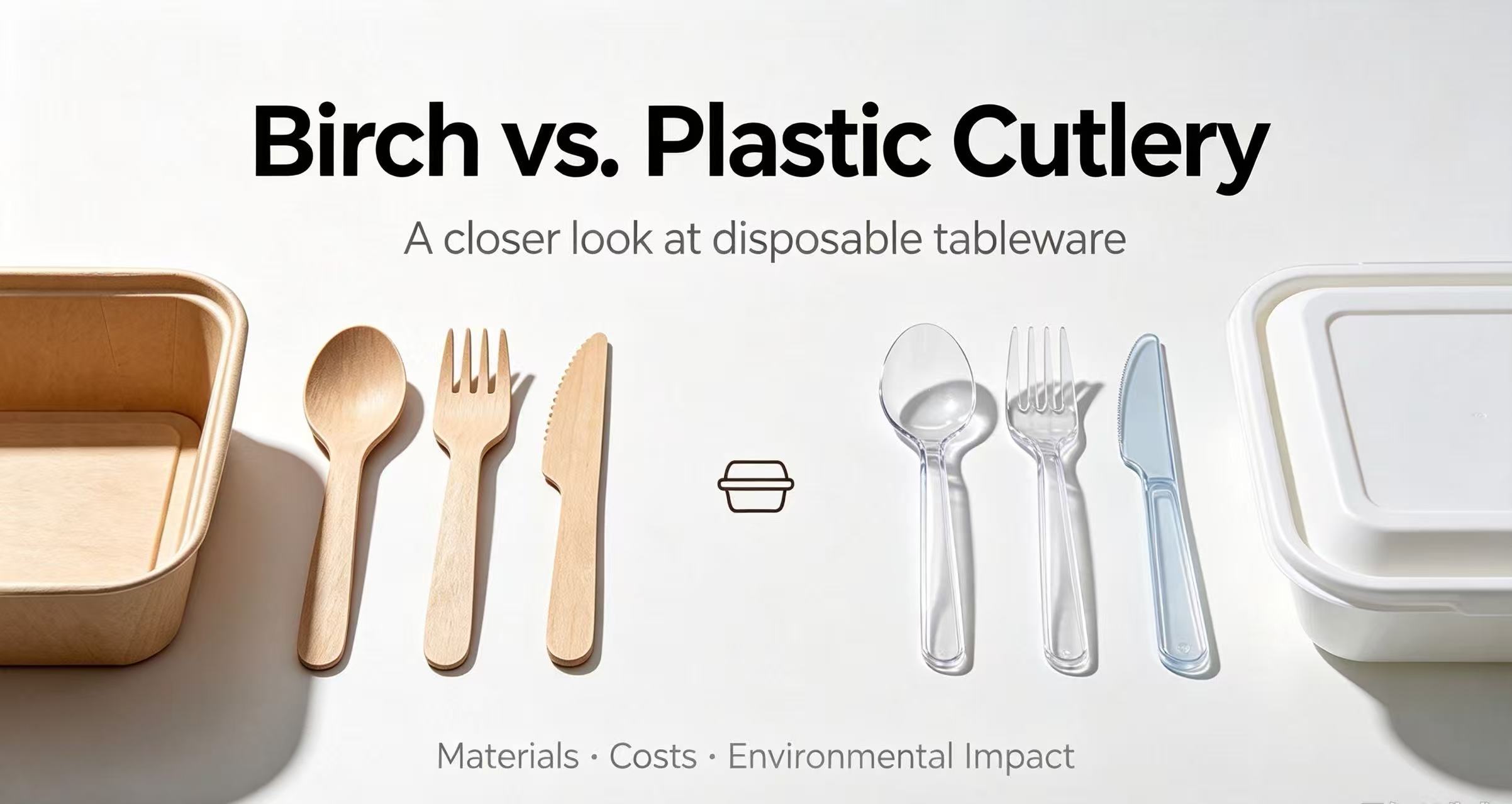
Why Birch Wooden Cutlery Is the Best Alternative to Plastic
If you are a foodservice buyer in Europe or North America, you have probably received dozens of emails from suppliers claiming their disposable cutlery is "eco-friendly" and "plastic-free." Most of them say the same things. Very few explain the actual differences between materials, or help you understand which option works best for your specific business.
This article is not a sales pitch. It is a practical comparison based on our experience manufacturing birch wooden cutlery for European and American markets since 2012.
What Makes Birch Different from Other Materials?
The disposable cutlery market offers three main alternatives to conventional plastic: birch wood, bamboo, and PLA (polylactic acid, a plant-based bioplastic). Each has its own strengths and weaknesses.
Birch wood is a dense hardwood with a tight grain structure. This gives it two advantages over softer woods: it resists splintering, and it holds its shape under pressure. A birch fork with a thickness of 1.55mm can handle a full dinner plate without bending. A softer wood fork of the same thickness would snap.
Bamboo is harder than birch, but it is also more brittle. It works well for skewers and stirrers, but for forks and knives, the tines and blades need a material that flexes slightly under pressure rather than cracking. That is why birch is the preferred material for cutlery, while bamboo is better suited for simple shapes.
PLA cutlery looks and feels like plastic. It is industrially compostable, but it requires specific conditions to break down, and most commercial composting facilities in the US and Europe will not accept it unless it carries specific certifications. In everyday use, PLA forks and knives can soften when they come into contact with hot food.
The Real Numbers: Birch vs Plastic vs PLA
Here is a direct comparison of the key factors that matter to foodservice buyers.
| Factor | Birch Wood | Conventional Plastic | PLA |
|--------|-----------|---------------------|-----|
| Raw material | Natural birch wood | Petroleum-based | Corn starch / sugarcane |
| Degradation time | 6-12 months in natural conditions | 400+ years | Requires industrial composting |
| Heat resistance | Up to 90°C / 194°F | Melts at high temperatures | Softens at 50-60°C |
| Food safety | No chemical additives | May contain BPA or phthalates | Generally safe |
| Cost per piece | Moderate | Low | High |
| Customer perception | Premium, natural, sustainable | Negative in most markets | Neutral to positive |
The cost of birch cutlery sits between plastic and PLA. It is more expensive than conventional plastic, but cheaper than most PLA products. For buyers who need to replace plastic cutlery without drastically increasing their budget, birch is often the most practical choice.
What to Check Before You Buy Birch Cutlery
Not all birch cutlery is the same. Here are the four most common quality issues we see in the market, and how to avoid them.
1. Thickness and weight
A 160mm birch fork should weigh between 1.5g and 2.0g, depending on the design. If a supplier quotes a weight significantly lower than this, the fork will feel flimsy and may break under normal use. Ask for the exact weight per piece before placing an order.
2. Surface finish
Run your finger along the edge of the fork tines and the handle. If you feel any roughness or splinters, the polishing process was rushed. A properly finished birch fork should feel smooth on all edges, with no visible burrs.
3. Moisture content
Birch wood that has not been properly dried will warp or crack after packaging. The ideal moisture content for birch cutlery is between 8% and 12%. If you are sourcing from a new supplier, ask for their moisture control process.
4. Certification
For the European market, FSC certification is essential. For the US market, FDA compliance is required for food contact materials. SGS testing reports provide third-party verification of food safety. If a supplier cannot provide these documents, the risk is not worth taking.
Why We Use Birch
Runda Wooden Industry is located in Mudanjiang, Heilongjiang, in northern China. This region is known for its birch forests, and we have access to high-quality raw material within a short distance from our factory. Our 30,000-square-meter facility runs 10 automated production lines, producing over 10 million pieces per day.
We use birch for our cutlery because it offers the best balance of strength, flexibility, and food safety. Our forks, knives, spoons, and sporks are made from 100% natural birch wood, with no chemical additives, no bleaching, and no wax coating. Every piece is polished to a smooth finish and inspected before packaging.
We hold FSC, ISO 9001, ISO 14001, SGS, FDA, LFGB, and BSCI certifications. For customers with specific market requirements, we can also provide additional testing upon request.
What This Means for Your Business
If you are currently sourcing plastic cutlery and need to switch to a compliant alternative, birch wood is a practical choice that balances cost, performance, and environmental responsibility. It works for restaurants, catering companies, airlines, and food delivery services.
If you are already sourcing birch cutlery and want to verify your supplier's quality, the four checkpoints above will help you identify potential issues before they affect your customers.
If you have questions about birch cutlery specifications, packaging options, or certification requirements, feel free to contact us. We are happy to share our experience and help you find the right solution for your market.