
PCBA Electronic
Call Us: +86 18045354333
Call Us: +86 18045354333


On August 15, 2026, something quietly but firmly shifted in the Chinese foodservice industry. The Ecological Environment Code of the People's Republic of China formally took effect. What had been a decade of policy guidance and local pilot programs suddenly became national law, with teeth.
 The rules, in plain terms:
What's banned from production and sale: Disposable foamed plastic tableware (think foam takeout boxes) and plastic shopping bags thinner than 0.025mm.
What's restricted in use: Non-degradable plastic lunch boxes, bowls, plates, forks, knives, spoons, and stirrers in dine-in and takeout scenarios.
What still works: A carefully defined “exemption list” exists. Fresh food cling wrap, household plastic bags, medical packaging, and industrial containers are untouched. The rule targets commercial, single-use, non-degradable items.
The penalty is real. For enterprises, violations start at 10,000 RMB and can reach 100,000 RMB. Individual operators face 500 to 5,000 RMB. Manufacturers and sellers of banned products face confiscation plus fines of one to three times the product value.
But here's what the headlines miss.
The interesting story isn't the ban itself. It's what happens when a legal mandate collides with the everyday reality of running a restaurant. An estimated million-plus foodservice businesses in China now have to replace something they've relied on for years, and they have to do it without breaking their supply chain or their budget.
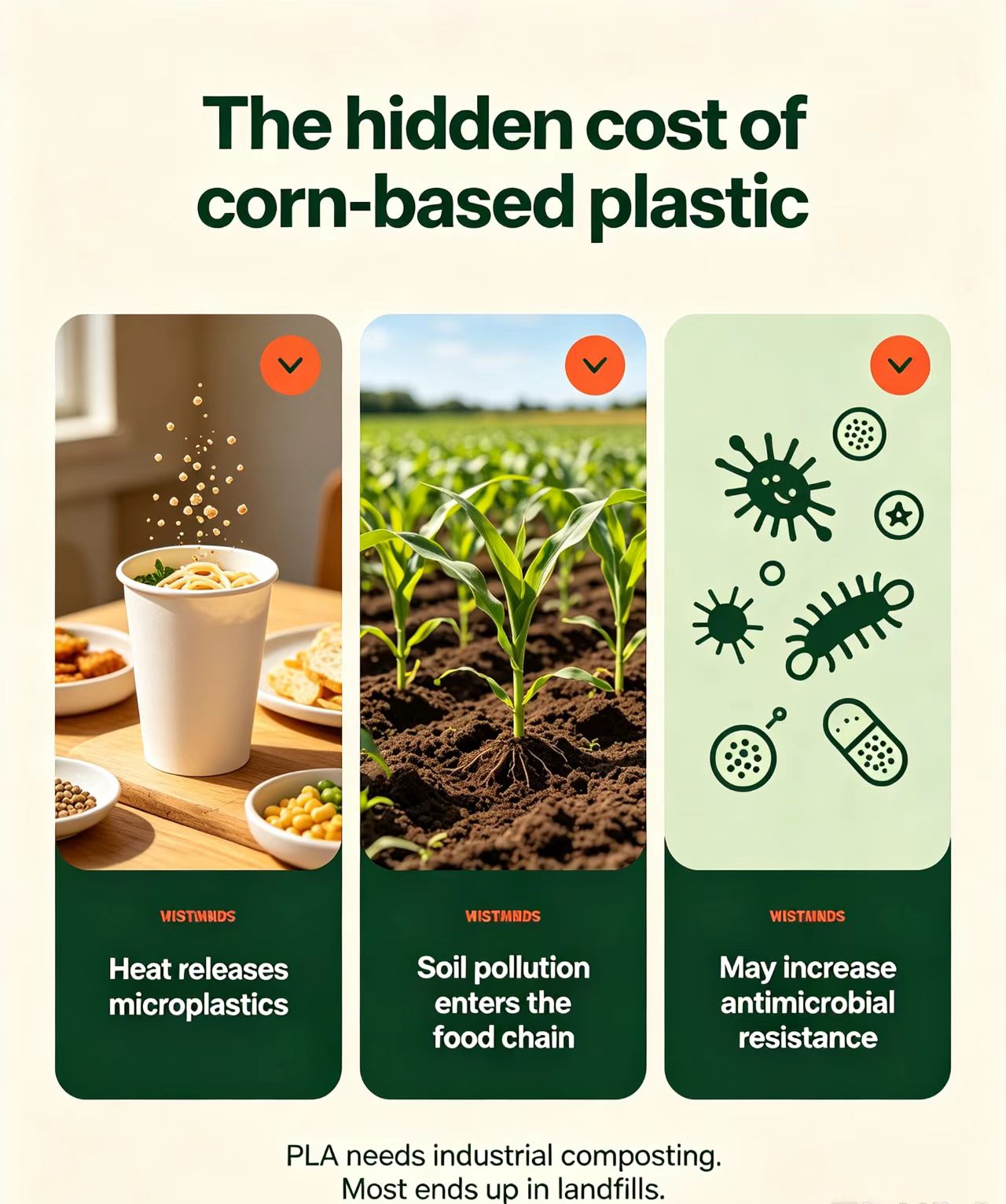
The obvious beneficiaries are biodegradable materials. But the market is already separating the serious players from the opportunists. The Code explicitly disqualifies “oxo-degradable” or “photo-degradable” plastics — the so-called “pseudo-degradable” products that marketing teams have pushed for years. Only fully biodegradable materials or plant-fiber products qualify.
This is where wood enters the conversation.
Wooden cutlery — birch, bamboo, and similar plant-fiber materials — is not a compromise. It's a category that was already growing quietly in the export markets before this law made it urgent at home.
A wooden fork doesn't need a “biodegradable” certification badge to biodegrade. It just does. And for foodservice operators who are tired of explaining why their “eco-friendly” plastic still feels like plastic, that simplicity is the point.
What this means for Runda's partners.
For our European and North American customers, the Chinese regulatory shift is a signal, not a surprise. It confirms a direction that markets in the EU and parts of the US have been moving toward for years. The difference is speed. When China's domestic market starts switching to wooden tableware at scale, supply chains adjust.
We've been manufacturing birch wooden cutlery for over a decade. We hold FSC, SGS, FDA, and LFGB certifications. This isn't a pivot for us. It's the category we chose to specialize in before it became a headline.
If you're a distributor or foodservice buyer watching this space, the question isn't whether wooden tableware will become more relevant. It's whether your supplier was already prepared when it did.
Runda Wooden Industry. Manufacturing responsibly sourced wooden tableware since 2012.
Name: Mr. Hou
phone:+86 18045354333
Whatsapp:8613089892462
Email:info@rundacultery.com
Add:Mudanjiang, Heilongjiang, China